
vrindavan
Vrindavan doesn’t announce itself; it seeps in slowly. This is the forest where Krishna is believed to have spent his childhood among gopis and cows, where every tree seems to hold a story older than the town itself.

Today, over five thousand temples are said to exist within Vrindavan, though most visitors only manage a handful, starting with the iconic Banke Bihari Temple, where the deity’s eyes are covered periodically because devotees believe his gaze is simply too powerful to bear continuously.
The town’s rhythm follows bhajans, not clocks. At the ISKCON temple, complexes built specifically to welcome global visitors into Krishna consciousness, kirtans continue late into the evening, drawing both lifelong devotees and curious travelers.
Meanwhile, the older, more weathered Radha Raman Temple, built in the 16th century, offers a quieter, more intimate glimpse into Vrindavan’s Bhakti movement roots, a spiritual revival led by saints like Chaitanya Mahaprabhu centuries ago.
Vrindavan’s widows, once a somber footnote in the town’s story, have become part of a broader cultural conversation, particularly during the town’s Holi celebrations, when color and joy are reclaimed in ways that feel genuinely moving.
Along the Yamuna, the Keshi Ghat offers sweeping evening views, especially during aarti, when hundreds of lamps flicker in unison against the darkening sky.
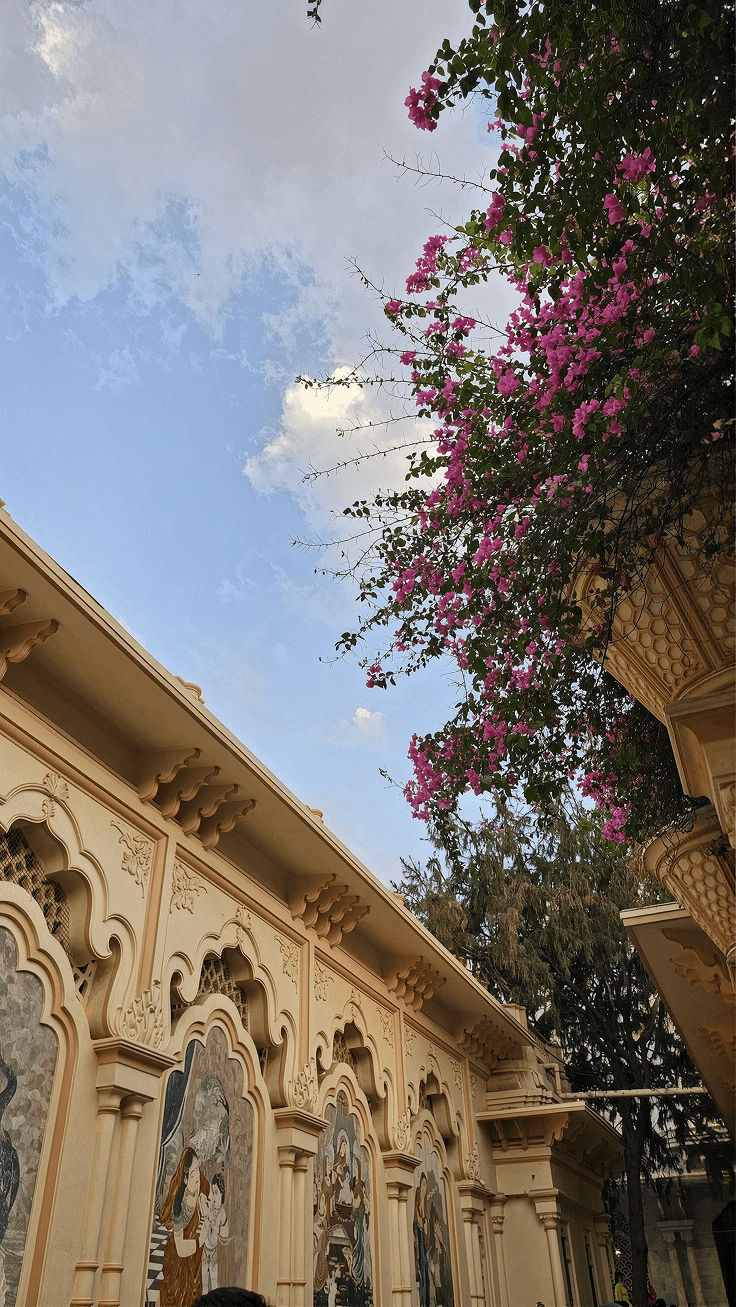
Vrindavan isn’t a single sight; it’s an atmosphere, one built from centuries of devotion, music, and stories that refuse to fade with time.
